+1 416 895 3026
 Fee Calculator



















Even with stricter rules and a period of inactivity, a determined entrepreneur secured approval to grow his Canadian company.
Meet “Mr. F” – An Entrepreneur from Libya
Mr. F, a citizen of Libya, first came to Canada in 2022 to set up a food trade company. His idea was simple but powerful: buy Canadian agricultural products and export them to North Africa, where demand for these goods was strong.
Soon after, business complications in Libya forced him to return home. His Canadian company became inactive, revenue was minimal, and his work permit expired. Two new challenges stood in his way when he decided to try again.
The Challenge
- Ownership Requirement – Canadian immigration rules had changed. Entrepreneurs now need at least 51% ownership of their company to qualify for certain work permits. Mr. F was a 50% shareholder alongside a Canadian partner.
- Business Inactivity – Immigration officers look closely at whether a company is viable. Since his Canadian business had little progress since incorporation, this raised questions about his commitment and credibility.
The Strategy
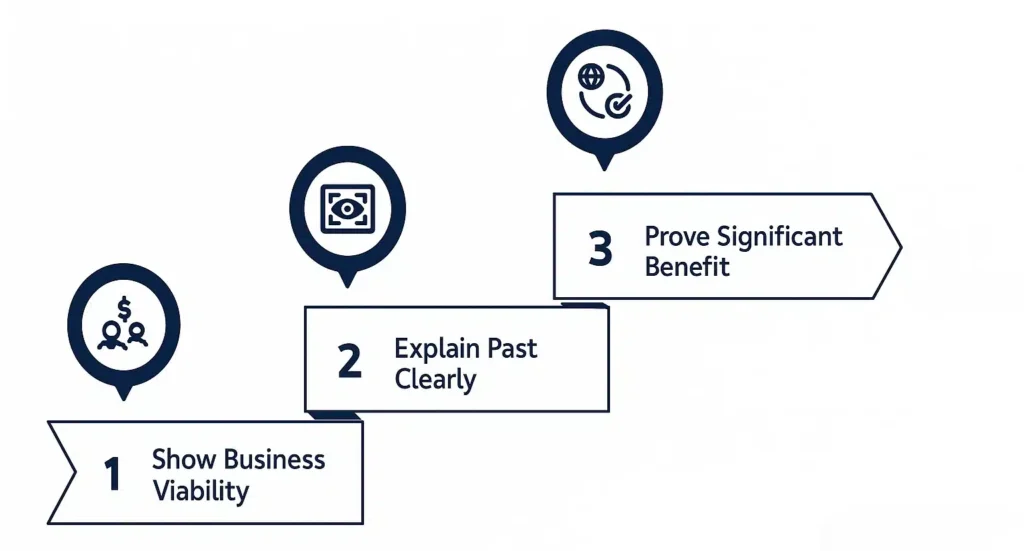
To move forward, we focused on three key areas:
- Showing Business Viability: We demonstrated that the entrepreneur had confirmed customers abroad and he was ready to export Canadian products such as pulses and grains to new markets in North Africa.
- Explaining the Past Clearly: We addressed why the business did not succeed the first time and emphasized that he had fully respected immigration rules—leaving Canada promptly when his permit ended and maintaining his primary residence in Libya.
- Proving Significant Benefit to Canada: We emphasized the export-driven nature of the business, showing how Mr. F would open new markets for Canadian agricultural products in North Africa. We also highlighted the fact that his operations were based in a smaller Ontario town, demonstrating how the business would support rural economic development and create jobs outside Canada’s major cities.
The Result
IRCC approved a two-year work permit under the C10 Significant Benefit program. Mr. F can now return to Canada, re-activate his company, and connect Canadian farmers with reliable buyers in North Africa. This is great achievement for the entrepreneur, Canada that is looking for new markets for Canadian goods and us as immigration advisors who supported Mr. F’s endeavours.
What Entrepreneurs Can Learn
If you are planning to establish or restart a business in Canada, Mr. F’s case illustrates several important points:
- If your first attempt didn’t work out, you can still succeed by being transparent and compliant.
- Positioning your business in smaller communities can be a real advantage under the C10 program.
- Strong contracts and market demand carry more weight than promises or projections.
Could the C10 Program Work for You?
This program may be an option if you:
- Own less than 51% of a business in Canada, but are essential to the success of your Canadian operations
- Can show that your business is viable and is likely to succeed in Canada
- Are ready to demonstrate clear benefits for Canada’s economy and workforce.
Contact us for a consultation to see if your business goals fit the C10 pathway.
Disclaimer
This story is for informational purposes only. Details have been anonymized. Immigration laws change frequently. Past results do not guarantee future outcomes.
WE ARE MEMBERS OF